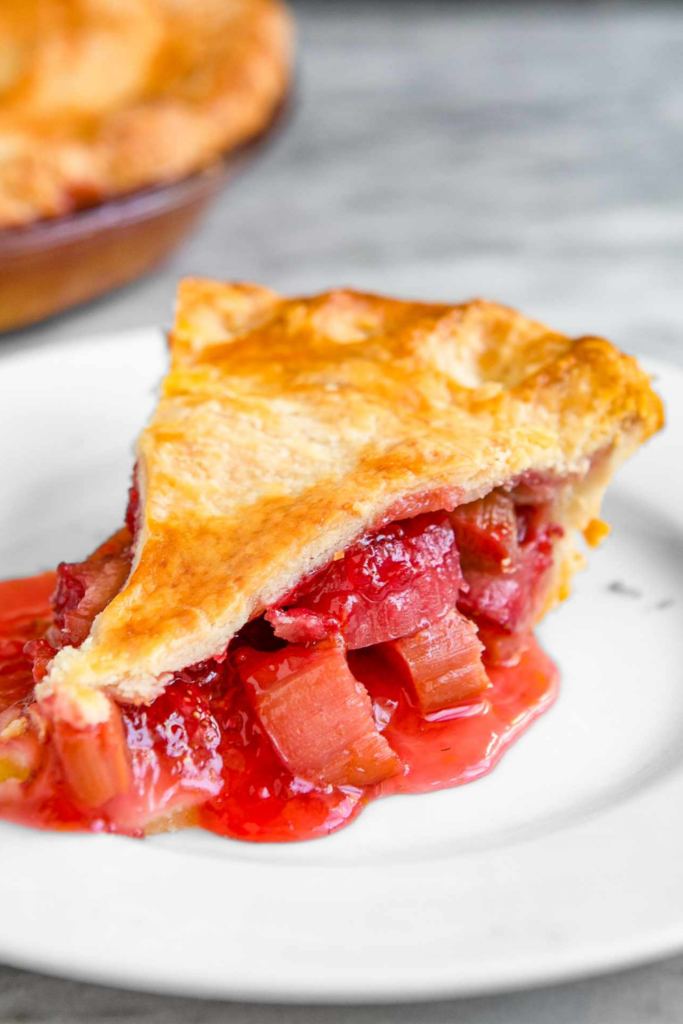
I don’t make this pie every week, and that’s exactly why I love it so much. It’s one of those recipes I wait for. When I finally see good rhubarb at the store, I grab it like it’s a limited-edition item that might disappear if I hesitate.
The mix of strawberries and rhubarb just works. The berries bring sweetness, the rhubarb brings this bright, tangy punch, and together they taste balanced instead of sugary. I’ve made fruit pies that felt heavy. This one never does.
The first time I baked it, I expected something overly tart. Instead, it came out fresh-tasting and kind of addictive. Now it’s the pie I make when I want something that feels homemade in the best way, slightly messy, very real, and absolutely worth turning on the oven.
Ingredients I Used for the Recipe
- 3 1/2 cups rhubarb stalks, sliced into 1/2 inch pieces - this is the tart backbone of the pie and gives it that signature flavor.
- 2 cups fresh strawberries, hulled and sliced - these add natural sweetness and soften the sharpness of the rhubarb.
- 3/4 to 1 cup sugar - I adjust depending on how sweet the strawberries are; this balances the filling.
- 4 tablespoons quick-cooking tapioca - this thickens the juices so the pie slices hold together instead of running everywhere.
- 1/4 teaspoon salt - just enough to sharpen the fruit flavors.
- 1 teaspoon finely grated orange zest - this adds a light citrus note that makes the filling taste brighter.
- 1 double-crust 9-inch pie dough - the base and top that hold everything together.
- 1 egg white, beaten, or 1 tablespoon cream (optional) - brushed on top for a golden finish.
How to make Starbucks Medicine Ball Recipe?
Step 1 - Prep the Fruit
I start by checking the rhubarb and making sure there are no leaves attached. The leaves are not edible, so they always get trimmed and tossed. Then I slice the stalks just like I would celery, nothing fancy.
The strawberries get hulled and sliced next. If they’re extra juicy, I don’t stress. That juice turns into flavor later.
Step 2 - Mix the Filling
In a big bowl, I gently combine the rhubarb, strawberries, sugar, tapioca, salt, and orange zest. I try not to mash anything. This is more of a fold than a stir.
Then I let the mixture sit for about 10 minutes. This step matters more than it seems. The fruit starts releasing its juices, and the tapioca begins soaking things up so the filling bakes evenly.
Step 3 - Prepare the Bottom Crust
I roll out the first piece of dough and fit it into the pie dish. It doesn’t have to look perfect. If it tears, I patch it. No one will know later.
I trim the edges so there’s about a half-inch overhang. That gives me enough dough to seal everything once the top goes on.
Step 4 - Add the Filling
I spoon the fruit mixture into the crust and spread it out evenly. By this point it already smells amazing, which always makes me feel like I’m on the right track.
I try to distribute the rhubarb and strawberries evenly so every slice gets both flavors.
Step 5 - Top the Pie
The second dough round goes over the top. I trim it, tuck the edges under, and crimp with my fingers or a fork. Some days I make it look nice. Other days I call it rustic and move on.
I cut a few slits in the top so steam can escape. If I remember, I brush it with egg white or cream for color.
Step 6 - Bake Until Bubbling and Golden
I bake the pie at 400°F for 20 minutes, then reduce the heat to 350°F and keep baking for another 40 to 50 minutes. I always put a baking sheet on the rack below because the filling sometimes bubbles over.
The pie is done when the crust is golden and the filling is visibly bubbling through the vents. That bubbling is the signal that the thickener has activated.
Step 7 - Let It Cool (This Is the Hard Part)
I take the pie out and force myself to let it cool. Cutting it too soon turns it into a delicious mess. Letting it rest helps everything set into clean slices.
Warm is great. Room temperature is even better if you want neat pieces.
What I Learned After Making This More Than Once
Rhubarb can be intimidating if you’ve never used it before. It looks like celery but smells sharper when cut. The first time I worked with it, I overthought everything. Now I treat it like any other fruit filling ingredient.
Some stalks are more tender than others. If one feels a little stringy, I peel that outer layer off. Most of the time I don’t bother. Once baked, it softens beautifully.
I also learned not to overload the sugar. Too much sweetness flattens the flavor. The magic of this pie is that sweet-tart balance that keeps you going back for another bite even when you said you were done.
Serving and Storing Without Overthinking It
I usually serve this pie slightly warm, sometimes with vanilla ice cream if I have it. If not, it stands perfectly well on its own. The fruit flavors are strong enough that it doesn’t need much dressing up.
It keeps at room temperature for a couple of days, loosely covered. After that I move it to the fridge. I actually think the flavor deepens the next day, which feels like a reward for planning ahead, even if I didn’t mean to.
If refrigerated, I let a slice sit out before eating. Cold fruit pie is fine, but bringing it back to room temperature brings the texture back to life.
Tips
- Let the fruit mixture rest before baking. This helps the thickener do its job and prevents a watery pie.
- Don’t skip the vent cuts in the top crust. They allow steam to escape and keep the crust from getting soggy.
- If your rhubarb is frozen, thaw and drain it first so extra moisture doesn’t overwhelm the filling.
- Bake until you see active bubbling in the center, not just around the edges. That’s how you know it’s fully cooked.
- Be patient while it cools. This is the difference between clean slices and a spoon-only situation.
- Taste your strawberries before adding sugar. Sweeter berries need less adjustment.
This pie isn’t fancy. It’s not complicated. It’s just one of those desserts that feels tied to a season, to a moment, to slowing down long enough to bake something from scratch. Every time I make it, it turns out a little different, and honestly, that’s part of why I keep coming back to it.