
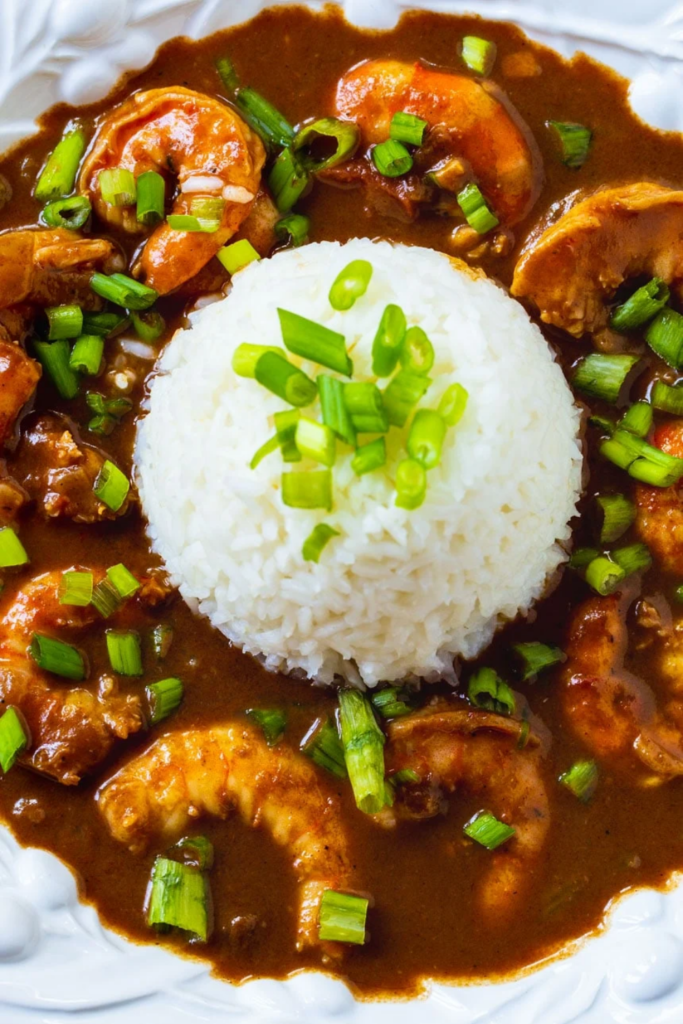

I didn’t grow up eating Southern food, so the first time I tasted something like this, it honestly surprised me. The flavors were bold, a little messy, a little spicy, and not shy at all. I remember thinking, why have I been cooking such safe food my whole life?
After a couple trips down South during the summer, I started craving those flavors back home. Not just wanting them. Craving them in that very specific way where nothing else sounds good. That’s what pushed me into making shrimp etouffee for the first time.
The weather had turned cool and windy that weekend, and it just felt right to make something warm, thick, and comforting. I didn’t expect it to become one of my favorite things I cook all year, but here we are.
What Makes Shrimp Etouffee So Different From Other Shrimp Dishes
This is not a light shrimp dinner. It’s rich. It’s hearty. It sits somewhere between a stew and a gravy, and that’s exactly why I love it.
The base starts with a roux, which sounds fancy but really just means standing at the stove stirring butter and flour until it turns the color of peanut butter. The first time I made it, I almost stopped too early because I thought I burned it. Turns out, that deep color is where all the flavor lives.
Then come the vegetables, the seasoning, the broth, and finally the shrimp. Everything kind of melts together into this thick, savory mixture that tastes like it cooked all day even though it didn’t.
It’s slightly spicy, but not the kind of spicy that hurts. More like a slow warmth that keeps you going back for another bite.
Ingredients I Used for the Recipe
- Butter – This starts the roux and also gets stirred in at the end for richness.
- All-purpose flour – Combines with the butter to create that deep, flavorful base.
- Onion – Adds sweetness and body as it cooks down.
- Celery – Gives that classic savory backbone you expect in Southern cooking.
- Green bell pepper – Brings a little freshness and balance to the richness.
- Garlic – Because I don’t trust any savory recipe without it.
- Fresh thyme – Adds an earthy note that makes everything smell incredible.
- Chicken broth – Loosens the roux into a sauce and carries all the flavor.
- Diced tomatoes – Give a subtle acidity and texture without making it tomato-heavy.
- Cajun seasoning – The main personality of the dish. Warm, bold, slightly smoky.
- Worcestershire sauce – Just a little for depth. You don’t taste it directly, but you’d miss it if it wasn’t there.
- Shrimp, peeled and deveined – The star. They cook quickly and soak up all that sauce.
- Hot sauce – Adds heat. I adjust depending on mood.
- Salt and pepper – To bring everything into focus.
- Lemon juice – A splash at the end wakes the whole dish up.
- Scallions – For a mild onion finish and color.
- Fresh parsley – Brightens the richness and makes it feel complete.
- Brown rice cooked in chicken broth – Soaks up the sauce and turns this into a full meal.
How to make Starbucks Medicine Ball Recipe?
Step 1 – Season the Shrimp
I toss the shrimp with Cajun seasoning first and let them sit in the fridge while I start everything else. This is a small step, but it makes the shrimp taste seasoned all the way through instead of bland inside.
Step 2 – Make the Roux
I melt butter in a large pan over medium heat, then whisk in the flour. Then I stir. And stir. And keep stirring.
After about 10 minutes, it turns a deep brown, like peanut butter. That’s when I know it’s ready. If you rush this part, the whole dish feels flat.
Step 3 – Cook the Vegetables
In go the onion, celery, and green pepper. They soften and soak up that roux, and the smell at this point is ridiculous. I cook them until tender, usually around 8 to 10 minutes.
Step 4 – Add Garlic and Thyme
These only need about a minute. Garlic burns fast, so I don’t walk away here. Learned that the hard way once.
Step 5 – Build the Sauce
I whisk in the chicken broth slowly so everything stays smooth. Then I add tomatoes, more Cajun seasoning, and Worcestershire sauce.
This simmers for about 20 minutes. The sauce thickens and all the flavors settle into each other.
Step 6 – Cook the Shrimp
The shrimp go in last because they cook fast. About 5 minutes is all they need. Overcook them and they get rubbery, which is a tragedy I try to avoid.
Step 7 – Finish the Dish
I add hot sauce, salt, and pepper to taste, then stir in butter, lemon juice, scallions, and parsley. That final butter makes it glossy and rich in the best way.
Step 8 – Prepare the Rice
While the etouffee simmers, I cook brown rice in chicken broth instead of water. It gives the rice flavor so it’s not just sitting there being plain.
Step 9 – Serve It All Together
I spoon the rice into bowls and ladle the shrimp etouffee right over the top. The sauce seeps down into the rice and that’s where the magic happens.
The Little Things I Started Doing That Made It Even Better
The first time I served this, I packed the rice into a measuring cup just to see if I could make it look neat on the plate. It slid out perfectly shaped, and now I do that every time like I’m on a cooking show even though I’m definitely not.
I also learned this dish tastes even better about 10 minutes after cooking. Letting it sit just a bit helps it thicken and settle. If you dig in immediately, it’s still great, just slightly looser.
Sometimes I swap the rice for quinoa if that’s what I have around. The flavor still works, which makes this recipe feel flexible instead of fussy.
And I always, always make extra because the leftovers might be my favorite part. The flavors deepen overnight, and lunch the next day feels like a reward.
Tips
Don’t rush the roux. That’s the foundation. If the color isn’t there, the flavor won’t be either.
Have everything chopped before you start cooking. Once this recipe gets moving, it moves fast, and you don’t want to be scrambling for a knife.
Taste as you go. Cajun seasoning blends vary a lot, so sometimes I add more, sometimes less.
Use good shrimp if you can. Since they’re the main ingredient, it really does matter.
If the sauce gets too thick, add a splash of broth. If it’s too thin, just let it simmer longer. It’s forgiving like that.
Don’t skip the lemon juice at the end. It sounds small, but it balances the richness and pulls everything together.
Serve it hot, in big bowls, and don’t worry about making it look perfect. This is comfort food. It’s supposed to feel relaxed.
And finally, make it your own. I’ve tweaked this over time without even realizing it. That’s when you know a recipe has really settled into your kitchen.
Shrimp Etouffee Recipe
Description
A rich, flavorful Cajun classic from New Orleans, this Shrimp Étouffée features plump shrimp smothered in a deeply savory roux-based sauce with onions, celery, bell peppers, garlic, tomatoes, and bold Cajun seasoning. Served over brown rice cooked in chicken broth, it’s hearty, slightly spicy, and bursting with Southern comfort.
ingredients
Étouffée
Brown Rice
Instructions
Prepare Shrimp & Rice
-
Season shrimp
Toss shrimp with 1 tablespoon Cajun seasoning. Cover and refrigerate until needed. -
Start rice
Bring 2 cups chicken broth to a boil in a medium saucepan. Stir in brown rice, reduce heat to low, cover, and simmer for 5 minutes (or per package instructions). Fluff with a fork and keep warm.Begin rice while étouffée simmers.
Make the Étouffée
-
Make the roux
Melt ¼ cup butter in a large heavy-bottomed pot or Dutch oven over medium heat. Whisk in flour and cook, stirring constantly, until the roux turns the color of peanut butter (about 8–10 minutes). Do not burn. -
Sauté vegetables
Add onion, celery, and green pepper to the roux. Cook until softened, about 8–10 minutes. -
Add aromatics
Stir in garlic and thyme; cook 1 minute until fragrant. -
Build the sauce
Gradually whisk in chicken broth until smooth. Add diced tomatoes, 1 tbsp Cajun seasoning, and Worcestershire sauce. Bring to a simmer and cook uncovered for 20 minutes, stirring occasionally. -
Cook shrimp
Add seasoned shrimp to the pot. Cook for 4–5 minutes, just until shrimp turn pink and opaque.Do not overcook. -
Finish and serve
Remove from heat. Stir in hot sauce, salt, pepper, 1 tbsp butter, lemon juice, scallions, and parsley. Taste and adjust seasoning. -
Plate
Scoop warm brown rice into bowls. Ladle shrimp étouffée generously over rice. Garnish with extra parsley if desired.
Nutrition Facts
Servings 6
Serving Size 1 serving (with rice)
- Amount Per Serving
- Calories 485kcal
- % Daily Value *
- Total Fat 22g34%
- Saturated Fat 10g50%
- Cholesterol 215mg72%
- Sodium 890mg38%
- Potassium 620mg18%
- Total Carbohydrate 38g13%
- Dietary Fiber 4g16%
- Sugars 3g
- Protein 34g68%
- Calcium 8 mg
- Iron 20 mg
* Percent Daily Values are based on a 2,000 calorie diet. Your daily value may be higher or lower depending on your calorie needs.
Note
- Gluten-free option: Replace all-purpose flour with a gluten-free flour blend or use cornstarch slurry (1 tbsp cornstarch + 2 tbsp water) added at the end instead of a traditional roux.
- Lower-carb version: Serve over cauliflower rice instead of brown rice to reduce carbs significantly.
- Make ahead: The base (without shrimp) can be made 1–2 days ahead. Reheat and add shrimp just before serving.

Frequently Asked Questions
What does 'étouffée' mean?
It comes from the French word 'étouffer,' meaning 'to smother.' The dish features seafood smothered in a thick, flavorful sauce.
Can I use frozen shrimp?
Yes! Thaw completely in the refrigerator, pat dry, and season as directed. Avoid pre-cooked shrimp.
Is this recipe spicy?
It has mild heat from hot sauce and Cajun seasoning, but it’s adjustable. Reduce or omit hot sauce for milder flavor.