

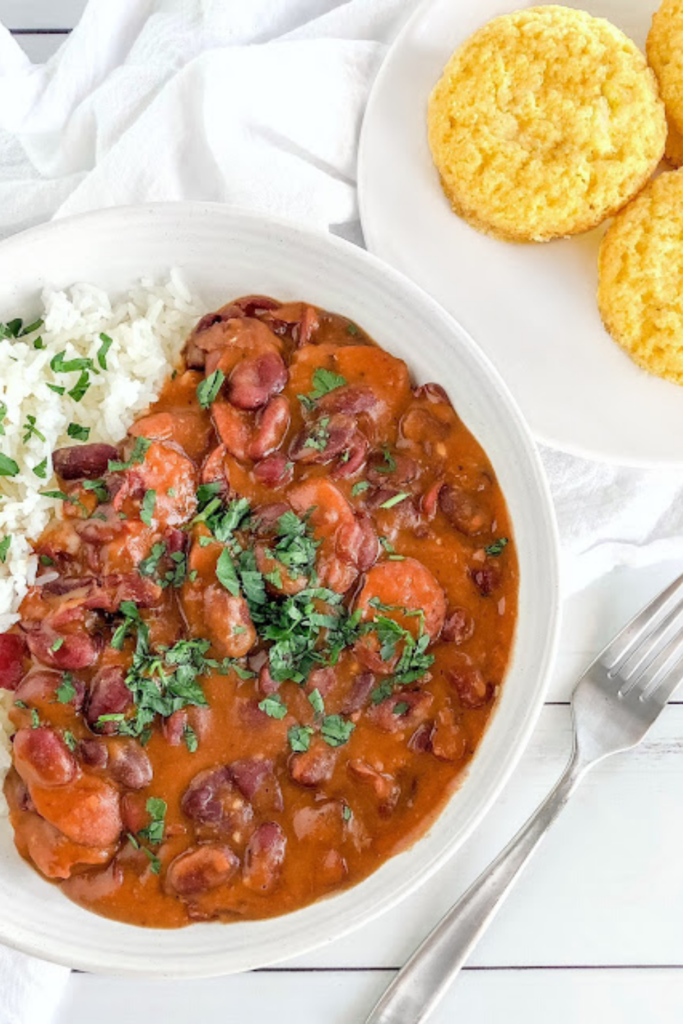

I used to think red beans and rice was just, you know, beans on rice. Something you eat when the paycheck is running thin and the fridge is looking sad. Then I went to New Orleans for the first time, ten years ago, and had a bowl at this little place on Magazine Street that didn’t even have a proper sign out front. And I got it. This isn’t poverty food. This is celebration food wearing work clothes.
Since then I have made red beans and rice probably fifty or sixty times. Maybe more. I have burned them, under-salted them, used the wrong kind of beans. I have learned that the difference between a bowl that tastes like duty and a bowl that tastes like Monday in Louisiana is mostly patience. Also pork. Definitely pork.
This is my version. It is not the only version. My friend from Baton Rouge uses pickled pork and swears by it. My neighbor from Lafayette thinks I am crazy for not using andouille. But this is the pot I keep coming back to. It’s the one that feels like home even though I am not from there.
Ingredients I Used for the Recipe
I have tried this with canned beans. I have. It works in a pinch. But it does not work the way you want it to work. The texture is wrong, the liquid never gets that velvety thickness. So this is what I actually use when I am doing it right.
- 1 pound dried red kidney beans – Not the small red beans, the big kidney ones. Camellia brand if you can find it. They are the gold standard. I order them online when my grocery store is slacking.
- 1 pound andouille sausage – But here is the thing. Good andouille is smoky and snappy. Bad andouille is just greasy. Spend the few extra dollars.
- 1 large yellow onion – Fine dice. If you rush the onion you rush everything.
- 1 green bell pepper – Also fine dice. Some people do half green half red for sweetness. I stay green.
- 3 ribs celery – Diced. This is the holy trinity. If you are missing one of these, just make something else.
- 4 cloves garlic – Smashed not sliced. I have used jarred garlic when I was out. It was fine. It was not great.
- 2 bay leaves – Dried. Fresh is prettier but dried works better here.
- 1 teaspoon dried thyme – Rubbed between my fingers before it goes in.
- 1 teaspoon smoked paprika – Not regular. The smoke matters.
- 1/2 teaspoon cayenne – I go light because my kids. You go heavy if you are you.
- 6 cups chicken stock – Homemade is lovely. Boxed is fine. Water is sad.
- A ham hock or a smoked turkey wing – This is non-negotiable for me now. You need that bone. You need that collagen.
- Salt and black pepper – At the end. Not at the beginning.
- Cooked white rice – Long grain. Fluffy. Separate grains. Not sticky.
- Sliced green onions and hot sauce – For the top. Crystal or Tabasco. Not sriracha. Do not.
How I Actually Make It
I used to think soaking beans overnight was just something cookbooks told you to do to make you feel like you accomplished something. Then I skipped it once because I was impatient and the beans were tough and chalky and my husband chewed them like peanuts. So now I soak. Not because I am virtuous. Because I want to eat dinner before midnight.
Step 1 – The Night Before, If You Remember
Pick through the beans. I know nobody does this. I found a tiny pebble once. You should do this. Rinse them cold. Put them in a big bowl, cover with water by two inches, leave them on the counter. If you forget, do a quick soak. Boil them hard for two minutes, turn off the heat, let them sit covered for an hour. It works. I have done it more times than I am proud of.
Step 2 – Brown the Sausage, No Crowding
Slice the andouille into coins. Not too thin, not too thick. Quarter rounds if your sausage is fat. Heat a heavy pot, Dutch oven is best, over medium. Toss the sausage in. Let it sit. Do not stir right away. You want brown crust. When one side is dark, flip them. They should look like little hockey pucks in a good way. Remove them with a slotted spoon. Leave the red grease in the pot. That is flavor.
Step 3 – Cook the Vegetables in the Fat
This is where you smell Louisiana. Turn the heat down a little. Add the onion, bell pepper, celery. Stir them around, scrape the bottom. Let them get soft and sweet. Not brown exactly but translucent. This takes longer than you think. Eight minutes at least. Add the garlic. Stir one minute. Your kitchen smells like sausage and onions and you are already winning.
Step 4 – Beans, Stock, Ham Hock, Herbs
Drain the beans. Rinse them again. Add them to the pot. Pour in the chicken stock. It should cover the beans by about an inch. Add more water if it doesn’t. Toss in the ham hock, the bay leaves, the thyme, the smoked paprika, the cayenne. Stir. Bring it to a boil. Then drop it to a simmer. Low and slow. Put the lid on but tilted so steam escapes. Walk away for a while.
Step 5 – The Long Wait and The Smash
This is the part you cannot fake. Two and a half hours. Maybe three. Stir every twenty minutes. Scrape the bottom. The beans will soften, the liquid will darken. Around hour two, take the back of a wooden spoon and smash some beans against the side of the pot. Not all of them. Just enough to release their starch. This is what makes the liquid creamy without adding cream. A magic trick that is not magic.
Step 6 – Bring Back the Sausage
Pull the ham hock out. Set it on a plate. When it is cool enough, shred that meat with two forks. It should fall apart. Discard the skin and bones. Put the shredded pork back in the pot. Add the reserved sausage. Stir. Taste. This is when you add salt. Probably a lot. Pepper too. The beans can take it. Let it all simmer together another twenty minutes so the sausage re-warms and the flavors marry.
What I Learned The Hard Way
The first time I made these I served them immediately. Mistake. They were good but they were not great. Red beans need to rest. Turn the heat off, leave the lid on, let them sit for an hour. The starch continues to swell, the flavors settle down. Reheat gently. They are better the next day. I am not sure why. Something about time and marriage and the beans finally relaxing.
Also, rice matters. I used to be a rice snob in the wrong direction. I bought expensive jasmine rice and wondered why it clumped. Red beans need simple rice. Plain long grain. Rinsed until the water runs clear. Cooked with just salt, no butter, no oil. The beans are the star. Rice is the stage.
And here is something nobody told me. The best red beans I ever made were the ones where I accidentally let the liquid cook down too much. It was almost stewy, almost dry, the beans starting to break apart completely. I thought I ruined it. My husband said it was the best bowl of his life. So now I let it go longer, let it get thicker, almost like the beans are surrendering into the gravy.
Tips That Actually Help
These are not chef tips. These are my tips, from my kitchen, from my mistakes.
- Do not salt the beans until the end. Salt early toughens the skins. I did not believe this. I tested it side by side. It is true. Late salt, tender beans.
- If your beans are still hard after two hours, add a pinch of baking soda. Not more than a pinch. It changes the pH and softens them. Works every time.
- Freeze individual portions. Red beans and rice freezes perfectly. I make a full pound of beans and we eat it for weeks. It is better every time.
- The ham hock is not optional. I know I said it before. I am saying it again. The collagen makes the broth silky. Without it the beans feel thin and honest in a bad way.
- Do not skip the green onions on top. They are not decoration. They are freshness. They cut through the richness. I used to think garnishes were fussy. Now I understand they are strategy.
- Pick your pot carefully. Too thin and the bottom burns before the beans soften. I use a 7 quart enameled cast iron. Lodge or Le Creuset, does not matter. Heavy bottom, tight lid.
I have served these beans to people from Louisiana twice. The first time I was nervous. I apologized in advance. I told them it was my interpretation, that I knew it probably was not right. They ate it. They went back for seconds. One of them asked for the recipe. I do not think they were just being polite. I think they recognized the respect in the pot. Not authenticity maybe, not the way their grandmother made it. But sincerity. Love. The long slow hours of it.
That is what red beans are, I think. They are Monday. They are the washday tradition, the pot left to mind itself while you scrub clothes. They are economy elevated by patience. They are not fancy. They do not try to impress you. They just sit there, dark and rich and porky, waiting for you to spoon them over rice and remember that simple things done right are not simple at all.
I make this on Sundays now. Sometimes Saturdays. The house fills up with onion and smoke and that particular quiet that comes when you are not rushing. I stir the pot. I smash beans against the side. I taste and add salt and taste again. It is not New Orleans. It is not even close. But it is my kitchen on a cool afternoon and the beans are finally soft and that is enough.
Louisiana Red Beans and Rice Recipe: My Version of Authentic
Description
A beloved New Orleans classic, this hearty and soul-warming dish features creamy red kidney beans slowly simmered with smoked andouille sausage, ham hock, and the holy trinity of Cajun cooking—onion, celery, and bell pepper. Served over fluffy white rice, it’s a one-pot meal packed with deep, smoky flavor and rich tradition, traditionally enjoyed on Mondays but perfect any day of the week.
ingredients
Instructions
-
Drain soaked kidney beans and place them in a large heavy pot or Dutch oven with water or broth. Add the ham hock and bring to a boil over high heat.
-
Reduce heat to low, cover, and simmer gently for 45 minutes.
-
While beans simmer, in a skillet over medium heat, brown the sliced andouille sausage until lightly crisp. Remove and set aside.
-
In the same skillet (or directly in the pot if space allows), sauté onion, bell pepper, and celery (the 'holy trinity') until softened, about 5–7 minutes. Add garlic and cook 1 minute more.
-
Add the cooked vegetables, browned sausage, bay leaves, thyme, cayenne, smoked paprika, and Worcestershire sauce to the pot with the beans.
-
Continue simmering uncovered for another 60–75 minutes, stirring occasionally, until beans are very tender and the mixture has thickened to a creamy consistency. Mash some beans gently against the side of the pot to help thicken.
-
Remove the ham hock. Let cool slightly, then shred the meat off the bone, discarding fat and bone. Return the shredded pork to the pot.
-
Season with salt and black pepper only if needed—the ham hock and sausage add plenty of salt. Remove bay leaves.
-
Let the red beans rest for 10 minutes before serving over hot cooked white rice. Garnish with green onions or parsley if desired.
Nutrition Facts
Servings 6
Serving Size 1 cup beans + 1/2 cup rice
- Amount Per Serving
- Calories 512kcal
- % Daily Value *
- Total Fat 16g25%
- Saturated Fat 5g25%
- Cholesterol 48mg16%
- Sodium 1120mg47%
- Potassium 980mg29%
- Total Carbohydrate 65g22%
- Dietary Fiber 15g60%
- Sugars 4g
- Protein 28g57%
- Calcium 8 mg
- Iron 25 mg
* Percent Daily Values are based on a 2,000 calorie diet. Your daily value may be higher or lower depending on your calorie needs.
Note
- Make it ahead: This dish tastes even better the next day! Store cooled beans in the fridge for up to 4 days or freeze for longer storage.
- No ham hock? Substitute with smoked turkey wings, salt pork, or 2 cups of diced smoked ham.
- Vegetarian option: Omit meat and use vegetable broth + liquid smoke; add extra smoked paprika for depth.
- Rice tip: Use long-grain white rice like jasmine or basmati for best results.

Frequently Asked Questions
Why is red beans and rice traditionally a Monday dish?
In New Orleans history, Monday was wash day—a long, labor-intensive chore. Families would put a pot of red beans on to simmer while they worked, using leftover ham bones from Sunday dinner. It became a cultural staple!
Can I use canned beans instead of dried?
You can, but the texture and depth of flavor won’t be as authentic. If using canned, reduce cooking time significantly (about 30–40 minutes) and adjust liquid accordingly.