Do you ever start cooking something that’s supposed to be “set it and forget it”… and then you end up hovering around like a nervous parent checking every five minutes?
Yeah. That was me with this pork butt.
I kept opening the lid. I knew I shouldn’t. I even told myself not to. Still did it. Every time I lifted it, heat escaped, smoke thinned out, and I’d just stand there staring at a chunk of meat like it was going to wave back at me.
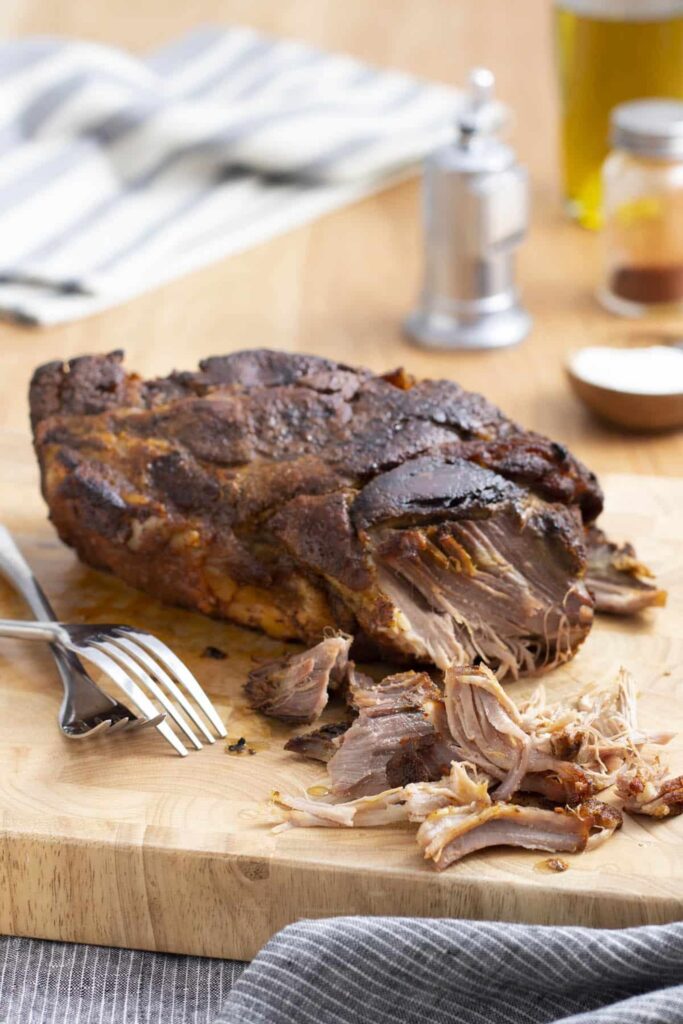
But here’s the thing. Even with my impatience, this turned out ridiculously good. Like, the kind of good where you pull it apart and it just… collapses. Juicy, smoky, a little messy, and honestly kind of addictive.
This is not a complicated recipe. It’s mostly waiting. A lot of waiting. But also tiny decisions along the way that somehow make it feel like you’re doing something important.
And I’ll walk you through exactly how I did it, mistakes included.
Ingredients I Used for the Recipe
- 8 lb pork butt - the main event, I went boneless because it was easier to deal with
- 1/4 cup yellow mustard - helps the rub stick, you won’t really taste it
- 2 tsp brown sugar - adds a slight sweetness and helps with that crust
- 1 tsp smoked paprika - for color and a deeper smoky flavor
- 1/2 tsp onion powder - background flavor, nothing loud
- 1/2 tsp garlic powder - same idea, just fills things out
- 1/2 tsp chili powder - very mild heat, I almost added more but didn’t
- 1/2 tsp dry mustard powder - layers with the wet mustard
- 1/2 tsp kosher salt - I actually added a tiny bit extra later
- 1/8 tsp black pepper - light bite, not too sharp
How to make Easy Smoked Pork Butt On Traeger Grill Recipe?
Step 1 - Trim the fat, but not too much
I started by staring at the fat cap way longer than necessary. You want to trim it down to about 1/4 inch, but I kept second-guessing myself. Took a little off, then stopped, then went back in again.
Eventually I just accepted it didn’t need to be perfect. Left enough to keep things juicy. That’s the goal.
Step 2 - Coat with mustard and rub like you mean it
I slathered the whole thing with yellow mustard. It looks weird at first. Kind of like you made a mistake. But stick with it.
Then I mixed all the spices in a bowl and went in heavy. Top, bottom, sides, corners. I even lifted it awkwardly to get underneath and almost dropped it. That would’ve been tragic.
I pressed the rub in with my hands instead of just sprinkling. Felt messy but worth it.
Step 3 - Let it sit… and wait longer than you want
I wrapped it and stuck it in the fridge overnight. Honestly, I was tempted to skip this part. But letting it sit makes a difference. The seasoning gets deeper into the meat.
The next day, I pulled it out and left it on the counter for about an hour. It looked kind of sad just sitting there, but bringing it closer to room temp helps it cook more evenly.
Step 4 - Fire up the Traeger and try to be patient
I set the grill to 250°F. Not 225, not 300. Right in that middle zone.
While it heated up, I checked the pellets. Almost forgot, actually. They were low. That would’ve been a disaster halfway through.
Once ready, I placed the pork butt directly on the grate, fat side up. Stuck the probe in the thickest part and closed the lid.
Then began the long stretch of… waiting.
Step 5 - The slow climb to 165°F (aka the test of patience)
This took about 8 hours for me. And yes, I opened the lid more times than I should admit.
The smell kept pulling me back. It’s not even hunger. It’s curiosity. Like, “has it changed yet?”
At some point I noticed the bark forming. Dark, slightly crusty. That’s when it started feeling real.
Step 6 - Wrap it up and push through the stall
When it hit 165°F, everything slowed down. This is that “stall” people talk about.
I wrapped the pork tightly in foil. Tried butcher paper once before, but foil felt easier that day. Less thinking.
Put it back on the grill and reinserted the probe. At this point, it’s just a waiting game again.
Step 7 - Let it go until it’s ridiculously tender
I let it climb to around 200°F. Somewhere between 198 and 202 is where it really softens.
When I poked it, the probe slid in with almost no resistance. That’s the moment. That’s when you know.
Step 8 - Rest it, even if you don’t want to
I pulled it off, wrapped it in a towel, and stuck it in a cooler. This part felt unnecessary in the moment because I was hungry.
But resting for about an hour made a difference. Juices settled, everything relaxed.
Step 9 - Shred and try not to eat half of it immediately
I unwrapped it and the smell hit hard. Smoky, rich, a little sweet.
Used two forks and it just fell apart. I picked out a few fatty bits, but honestly left some in because flavor.
I definitely ate a few bites standing there before even plating anything.
Little things I noticed along the way
I kept thinking this was going to be complicated. It wasn’t. It just takes time and a bit of attention at the right moments.
The mustard thing still surprises me. You don’t taste it, but if you skip it, the rub doesn’t stick the same.
The stall is real. The first time it happens, you think something’s broken. It’s not. Just wait it out or wrap it.
Also, I learned that opening the lid too much really does slow things down. I tested that accidentally.
Tips
- Don’t skip the resting time - it feels optional but it’s not
- Keep your pellet hopper full - running out mid-cook is not fun
- Use a thermometer - guessing will stress you out
- Resist opening the lid - I didn’t, and it added time
- Wrap tightly at 165°F - helps push through the stall faster
- If it finishes early, let it rest longer in the cooler - it stays warm
By the end of it, I had way more pork than I needed. Which sounds like a problem, but it’s really not. Sandwiches the next day were even better. A little messy, sauce dripping everywhere, but worth it.
This is one of those recipes where the process matters almost as much as the result. You check, wait, adjust, doubt yourself a little, then suddenly it all works.
And yeah, next time I’ll probably still open the lid too much.