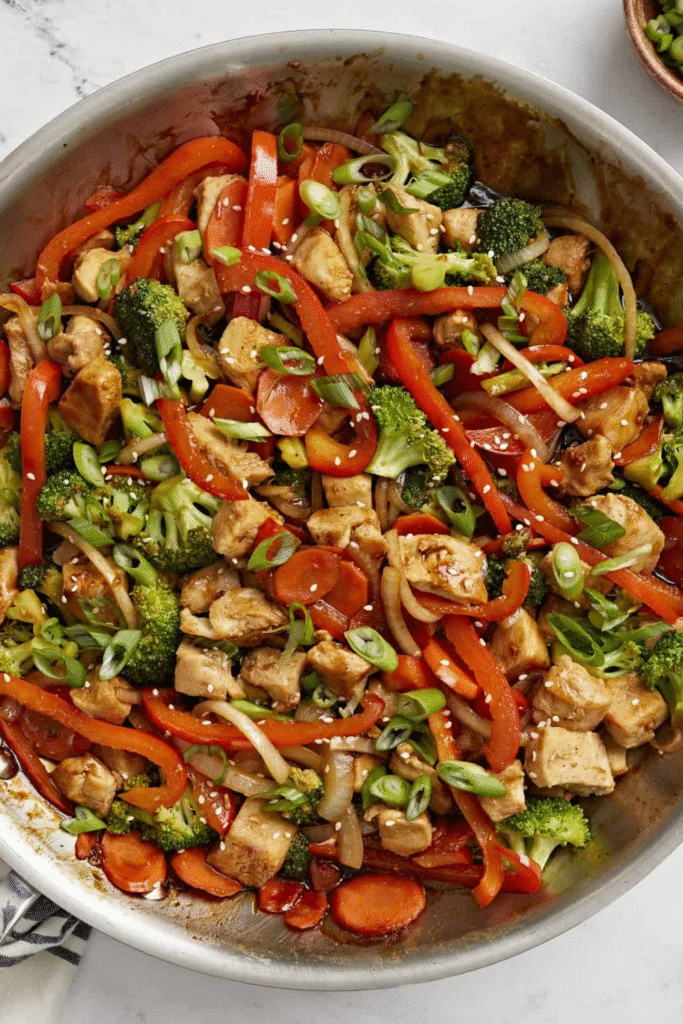
This chicken stir fry has quietly earned permanent status in my weeknight lineup. It started as a practical solution when I wanted high-protein dinners that didn’t eat up my entire evening, and somehow it turned into one of those meals everyone actually looks forward to.
There’s something comforting about knowing dinner will be ready in under 30 minutes and still taste like you put in real effort. The garlic-ginger sauce hits that sweet spot between savory and slightly sweet, with enough depth to feel special without being fussy.
I’ve made this on rushed Mondays, lazy Fridays, and those in-between nights when motivation is low but hunger is very real. Every time, it delivers. No complicated steps, no weird ingredients, just solid, dependable flavor.
What I love most is how flexible it is. You can swap vegetables based on what’s lingering in the fridge, adjust the heat, or serve it over whatever carb your family is craving that night.
It also happens to be one of those dinners where leftovers disappear fast. If there’s rice involved, someone is already eyeing tomorrow’s lunch before the plates hit the sink.
Why This Chicken Stir Fry Works So Well
This recipe balances speed and flavor in a way that feels almost unfair. The sauce comes together in one bowl, the chicken cooks quickly, and everything finishes in the same pan, which means fewer dishes and less cleanup.
The ingredient list is short but intentional. Each component pulls its weight, from the coconut aminos that add depth to the fresh ginger that wakes everything up without overpowering the dish.
It’s also naturally family-friendly. You can keep the spice mild, load it with vegetables, or serve it with noodles for kids who love twirlable dinners.
Ingredients Needed for the Recipe
- Olive oil or avocado oil – used to cook the chicken and vegetables while adding a clean, neutral richness.
- Boneless, skinless chicken breasts – the main protein, sliced thin so it cooks quickly and stays tender.
- Fine salt – seasons the chicken and brings out the natural flavors.
- Black pepper – adds subtle warmth without overpowering the sauce.
- Bell peppers – provide sweetness, color, and a bit of crunch.
- Snap peas or snow peas – add freshness and texture to balance the savory sauce.
- Green onions – layered in at different stages for both mild bite and garnish.
- Coconut aminos – the salty-sweet base of the sauce with a gentler flavor than soy sauce.
- Toasted sesame oil – gives the sauce that unmistakable stir-fry aroma.
- Tomato paste – adds body and a subtle tang that rounds out the sauce.
- Honey – brings just enough sweetness to balance the savory elements.
- Garlic – adds depth and that classic stir-fry flavor.
- Fresh ginger – brightens the sauce and keeps it from tasting flat.
- Crushed red pepper flakes – optional heat that can be adjusted to taste.
How to make Chicken Stir Fry?
Step 1 – Prep Everything First
Before the pan ever hits the stove, I like to have everything ready to go. Slice the chicken into thin strips, cut the vegetables, and separate the green onion whites from the greens.
This step makes the actual cooking feel calm instead of chaotic. Stir-frying moves fast, and having ingredients ready means nothing overcooks while you scramble to chop.
Step 2 – Cook the Chicken
Heat a large skillet over medium-high heat and add half of the oil. Once the oil shimmers, spread the chicken out in an even layer and season with salt and pepper.
Let it cook undisturbed for a few minutes so it can brown properly. Once cooked through, transfer it to a plate and set it aside so it stays juicy.
Step 3 – Sauté the Vegetables
Add the remaining oil to the hot skillet, then toss in the bell peppers, peas, and the white parts of the green onions. Stir frequently so they soften without losing their bite.
You’re looking for crisp-tender vegetables here. They should still have some structure, not turn limp or watery.
Step 4 – Mix the Sauce
While the vegetables cook, whisk together the coconut aminos, sesame oil, tomato paste, honey, garlic, ginger, red pepper flakes, and black pepper in a small bowl.
This sauce is where the magic happens. It’s balanced, glossy, and coats everything beautifully without being heavy.
Step 5 – Bring It All Together
Return the cooked chicken to the skillet with the vegetables and toss to combine. Pour the sauce over everything and stir until evenly coated.
Let it bubble briefly so the sauce thickens slightly and clings to each piece. This only takes a couple of minutes, but it makes all the difference.
Step 6 – Finish and Serve
Remove the pan from the heat and sprinkle the green onion tops over the stir fry. A handful of sesame seeds adds a nice finishing touch if you like.
Serve it hot over rice, noodles, or even on its own. It’s satisfying either way.
Serving Ideas That Never Get Old
I most often serve this chicken stir fry over fluffy white rice because it soaks up the sauce beautifully. Brown rice works just as well if you want something heartier.
Noodles are another favorite in my house, especially when someone wants a more takeout-style dinner. Chow mein-style noodles or even simple spaghetti in a pinch both work.
If you’re keeping things lighter, cauliflower rice is a solid option. It still gives you something to scoop the sauce with, which is half the fun.
Tips
- Slice the chicken evenly so it cooks at the same rate.
- Use a hot pan to avoid steaming the ingredients.
- Cook the chicken and vegetables separately to keep textures right.
- Add the sauce at the end so it doesn’t evaporate.
- Taste and adjust heat before serving.
Easy Variations and Swaps
This recipe is forgiving in the best way. I’ve swapped chicken breasts for thighs when I wanted something a little richer, and both work beautifully.
Vegetables are wide open for customization. Broccoli, mushrooms, zucchini, baby corn, or bok choy all fit naturally into this stir fry without changing the method.
If you prefer a different protein, shrimp or thinly sliced beef can step in with minimal changes. Just adjust cooking times so nothing overcooks.
Make-Ahead and Storage Notes
This chicken stir fry holds up surprisingly well, which makes it great for meal prep. Stored in an airtight container, it stays fresh in the fridge for several days.
It also freezes well if you want to plan ahead. Let it thaw overnight in the fridge, then reheat gently so the chicken stays tender.
I usually reheat leftovers in a skillet when I can. It brings the sauce back to life and keeps everything from turning mushy.
This is one of those recipes that quietly makes life easier. It’s reliable, adaptable, and genuinely enjoyable to cook, which is why it keeps finding its way back onto my table.