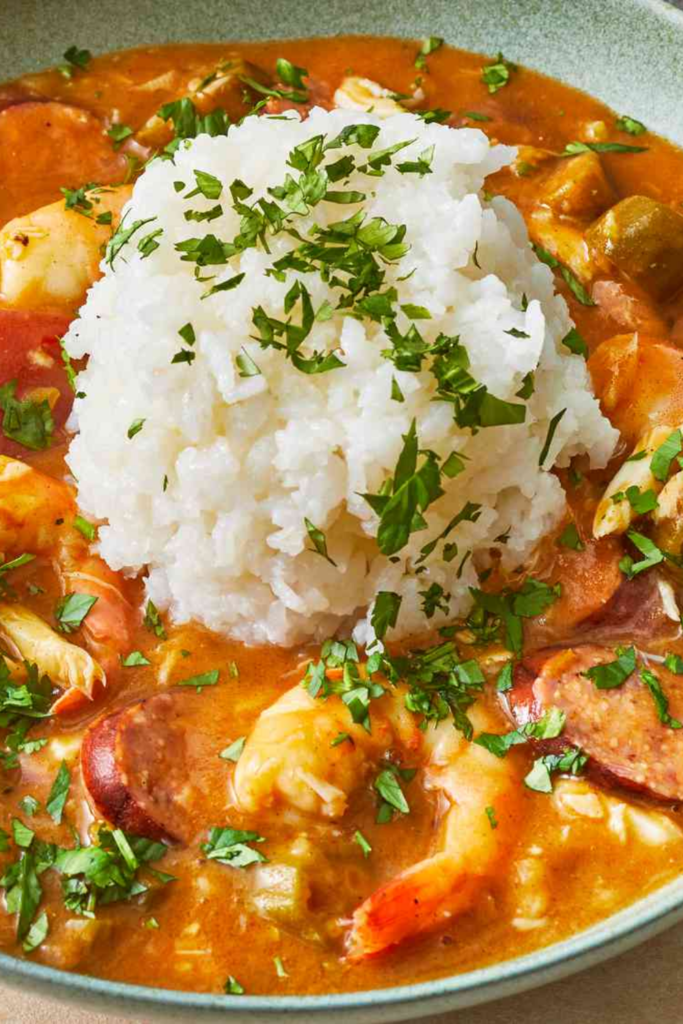
The First Time I Made This, I Had No Clue What I Was Doing
I still remember standing over the stove, wooden spoon in hand, wondering why this pot of flour and oil needed so much attention. I thought I had messed it up at least five times. Turns out, I hadn’t. That slow stirring is exactly what gumbo asks for.
This recipe came into my life years ago through someone who knew what real New Orleans cooking tasted like. Not fancy restaurant food. The kind you eat at the kitchen table while everyone talks over each other.
Since then, this gumbo has become one of those meals I fall back on when I want something deeply comforting. It’s rich, a little messy, and worth every second of effort.
Why This Gumbo Is Different From Anything Else I Make
Gumbo isn’t just soup. And it’s definitely not jambalaya. Jambalaya is more about the rice doing the heavy lifting, while gumbo is all about that thick, deeply flavored base built from the roux.
The roux is where the magic happens. Flour and oil cooked together until they turn the color of dark chocolate. It smells nutty, toasty, and a little intimidating if you’ve never done it before.
The first few times I made it, I was afraid to let it get dark enough. Now I know that patience is what gives gumbo its soul. You can’t rush it. I tried once. It tasted flat and I never cheated again.
Ingredients I Used for the Recipe
- All-purpose flour - This forms the base of the roux and gives gumbo its signature thickness.
- Vegetable or canola oil - Combines with the flour to create that rich, slow-cooked roux.
- Celery - Adds freshness and crunch. It’s part of the classic flavor foundation.
- Green bell pepper - Brings a slightly sweet, earthy balance to the dish.
- Yellow onion - Deepens the flavor as it softens into the broth.
- Green onions - Give a mild bite and brighten everything at the end.
- Fresh parsley - Adds a clean, herbal note that keeps the gumbo from feeling too heavy.
- Garlic - Because gumbo without garlic just feels wrong.
- Cajun seasoning - Builds that warm, slightly spicy backbone.
- Chicken broth - The liquid that carries all the flavor. A good broth really matters here.
- Andouille sausage - Smoky, bold, and honestly one of my favorite parts.
- Cooked chicken - Makes the gumbo hearty and filling.
- Shrimp - Adds sweetness and that classic Gulf-style feel.
- Hot cooked rice - Served underneath to soak up all that goodness.
How to make Starbucks Medicine Ball Recipe?
Step 1 - Make the Roux
I combine the flour and oil in a heavy pot over medium-low heat and start stirring. Then I keep stirring. And keep stirring. This can take 30 to 45 minutes.
The color slowly changes from pale to peanut butter to deep brown. When it looks like melted chocolate and smells toasted, it’s ready. If you stop stirring, it burns. Ask me how I know.
Step 2 - Brown the Sausage
In a separate skillet, I lay the sausage slices in a single layer and let them brown well before flipping. This step builds flavor you don’t want to skip.
Those caramelized edges end up seasoning the entire pot later.
Step 3 - Build the Flavor Base
I add a little chicken broth to the sausage pan to loosen all those browned bits, then pour that into the big pot. That’s free flavor right there.
Then in go the rest of the broth, chopped vegetables, parsley, garlic, and the finished roux. Everything gets stirred together until smooth.
Step 4 - Let It Simmer
I bring the pot to a gentle boil and let it cook for several minutes until the vegetables start to soften. The kitchen starts smelling incredible around this point.
I stir in Cajun seasoning and adjust it slowly. You can always add more, but you can’t undo it.
Step 5 - Add the Meats and Shrimp
The chicken and sausage go in first, followed by the shrimp. If the shrimp are raw, they cook fast. Just a couple minutes.
I taste constantly here. A little salt. Maybe more seasoning. Sometimes an extra splash of broth if it feels too thick.
Step 6 - Serve It the Right Way
I spoon the gumbo over hot rice instead of mixing the rice in. That way every bowl gets the perfect ratio.
And honestly, it tastes even better the next day. The flavors settle and deepen overnight.
What I Learned After Making This Dozens of Times
This recipe makes a lot, which used to annoy me until I realized gumbo freezes beautifully. Now I actually double it on purpose sometimes.
I let it cool completely, store it without the rice, and freeze portions for later. On busy nights, reheating gumbo feels like a gift from my past self.
You can even make the roux a few days ahead if you want to break up the work. That was a game changer once I figured it out.
Tips
Don’t rush the roux. If you try to crank up the heat, it will burn. Medium-low patience is the secret.
Chop your vegetables before you start cooking. Once the roux is going, you won’t want to step away.
Use a heavy pot if you have one. Thin pans make the roux cook unevenly, which is frustrating.
Taste as you go. Gumbo isn’t meant to be rigid. It’s meant to be adjusted until it feels right to you.
Serve it hot, over rice, and don’t worry about making it look perfect. Gumbo is supposed to be a little rustic.
And if it feels like too much effort halfway through, just keep stirring. Every time I do, I’m glad I didn’t quit.