
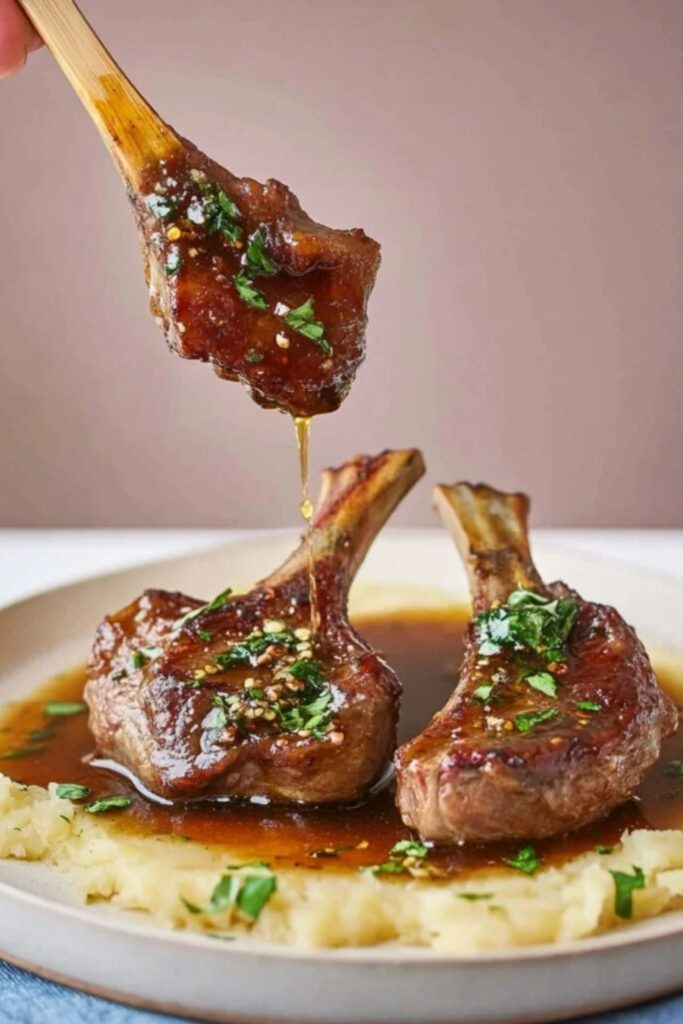

The pan was already too hot. I knew it the second the oil started shimmering like it had somewhere better to be. I still dropped the lamb chops in anyway. Loud sizzle. Tiny splash on my wrist. Regret, but also… okay, we’re doing this now.
I don’t really follow recipes straight. I treat them like suggestions, like someone whispering “hey try this” and I go “yeah, but what if I add ginger too?” That’s basically how these honey glazed lamb chops ended up being my thing. Not perfect, not fancy, but they hit that weird sweet-salty spot that makes you keep picking at the pan even after you said you were done.
Lamb is one of those meats that feels like it needs respect, but honestly, once you mess it up once or twice, you stop being scared. I’ve overcooked it, under-seasoned it, burned the glaze, all of it. And weirdly, every mistake made the next version better. This one right here is the version where things finally clicked… mostly.
Ingredients I Used for the Recipe
- Lamb chops – about 2 lbs, I like rib chops because they cook fast and don’t fight back
- Honey – 2 tablespoons, for that sticky sweetness that kind of caramelizes if you don’t panic
- Balsamic vinegar – 3 tablespoons, cuts the sweetness so it doesn’t feel like dessert
- Olive oil – 2 tablespoons, half for coating, half for cooking
- Vegetable oil – 2 tablespoons, helps get a better sear without burning everything instantly
- Garlic – 1 clove, minced, I always add a little extra because why not
- Garlic powder – 1 teaspoon, backup garlic basically
- Ginger paste – 1 tablespoon, this was my “let’s see what happens” addition that stuck
- Lemon zest – 1 tablespoon, brightens things up when it starts feeling heavy
- Thyme – 1 teaspoon, earthy and kind of grounding
- Salt – 1 teaspoon, or a little more depending on mood
- Black pepper – 1 teaspoon, for that gentle kick
How to make Honey Glazed Lamb Chops Recipe?
Step 1 – Throw together the seasoning
I grab a small bowl and mix salt, pepper, thyme, and garlic powder. Nothing fancy here. I once forgot the salt entirely and the whole thing tasted like confusion, so now I double-check. Sometimes I don’t measure exactly. It’s more like a rough sprinkle situation.
Step 2 – Make the glaze that looks too thin at first
In another bowl, I mix honey, balsamic vinegar, vegetable oil, minced garlic, ginger paste, and lemon zest. At this point, it looks like it won’t stick to anything. I always doubt it. Then later it thickens and proves me wrong. Happens every time.
Step 3 – Coat the lamb like you mean it
I toss the lamb chops into a bowl, drizzle olive oil over them, and rub it in with my hands. Yeah, it gets messy. Then I dump the seasoning on and press it into the meat. Not gently. Lamb can handle it.
Sometimes I let it sit for 15 minutes. Sometimes I don’t. If I’m hungry, it goes straight to the pan.
Step 4 – Sear and try not to mess with them too much
Heat a skillet over medium heat. I say medium, but I usually overshoot and then dial it back after the first chop hits the pan too aggressively.
I add the rest of the olive oil and lay the chops down. Then I tell myself not to move them. This is hard. I always want to peek. But if you leave them alone for about 4 minutes, they get that golden crust that makes everything else worth it.
Flip. Same thing on the other side. If they look a little uneven, I just rotate them around like I know what I’m doing.
Step 5 – Add the glaze and watch it transform
Once both sides are seared, I pour the glaze right into the pan. It sizzles, bubbles, smells like something expensive even though it’s not.
I spoon the glaze over the chops, kind of constantly. This is where I’ve burned it before by getting distracted. Honey goes from perfect to too dark pretty fast, so I stay close now.
After about 3 minutes, it thickens and clings to the meat. That’s the moment. That’s when you know it worked.
Step 6 – Let them rest even if you don’t want to
I pull the chops out and let them sit for a few minutes. I used to skip this and cut right in, and all the juice would run out like I just ruined my own effort. Now I wait. Barely. But I do it.
What I Noticed While Cooking This
The ginger surprised me the most. It doesn’t scream “hey I’m here,” but it sneaks in and makes the whole glaze feel deeper. Without it, the honey and balsamic are good, but a little flat.
Also, heat control matters more than I want to admit. I used to think higher heat equals better sear, but that’s how I ended up with burnt glaze and undercooked centers. Medium heat actually works. Annoying, but true.
And the lemon zest. I almost skipped it once because it felt unnecessary. Big mistake. The dish felt heavy, like it needed something to wake it up. The zest does that quietly.
Oh, and one time I added way too much balsamic. It turned kind of sharp and weird. Still edible, but not something I’d repeat. Now I keep it balanced.
What I Eat This With (when I’m not overthinking it)
I don’t plan sides in a serious way. It’s usually whatever I already have. Roasted potatoes work great because they soak up extra glaze if you drag them through the pan. Green beans are easy. Sometimes just a quick salad so I feel like I made a complete meal.
There was one time I ate these straight from the pan with bread. No plate. Just dipping and eating. Honestly, that might still be the best version.
Tips
- Pat the lamb dry before seasoning. I forget this sometimes and the sear suffers a little.
- Don’t add the honey glaze too early. It burns fast and gets bitter.
- If your pan starts smoking too much, lower the heat. I used to ignore this. It never ends well.
- Let the meat rest. Even a couple minutes helps keep it juicy.
- Taste the glaze before cooking. If it feels too sweet, add a bit more vinegar. If too sharp, a touch more honey fixes it.
- Use a thermometer if you care about exact doneness. I usually eyeball it, but medium-rare is around 130-135°F.
I still tweak this recipe every time. Sometimes I add more garlic. Sometimes I go lighter on the honey. It’s never identical, and I kind of like that. The base stays the same, but the little changes keep it interesting.
And yeah, sometimes I still start with the pan too hot. Old habits stick. But now I know how to recover, and honestly, that’s most of cooking anyway.
Honey Glazed Lamb Chops Recipe
Description
These Honey Glazed Lamb Chops are tender, juicy, and bursting with a perfect balance of sweet and savory flavors. The secret lies in the simple yet elegant honey-balsamic glaze that caramelizes beautifully during cooking. Ideal for special occasions or a luxurious weeknight dinner, these chops pair wonderfully with sides like sautéed cabbage or roasted green beans. Easy to prepare and impressive to serve, this recipe ensures a restaurant-quality meal right at home.
Ingredients
For the Lamb Chops
For the Honey Glaze
Instructions
-
Prepare the Seasoning
In a small bowl, combine the salt, black pepper, dried thyme, and garlic powder. Mix well until evenly distributed. Set aside. -
Make the Glaze
In a separate bowl, whisk together the balsamic vinegar, vegetable oil, honey, minced garlic, ginger paste, and lemon zest until smooth and well combined. -
Season the Lamb
Pat the lamb chops dry with paper towels to ensure a good sear. Place them in a large bowl or on a plate. Drizzle with 1 tablespoon of olive oil and rub to coat. Generously sprinkle the seasoning mixture over both sides of each chop. -
Sear the Chops
Heat a large skillet (cast iron works best) over medium-high heat. Add the remaining 1 tablespoon of olive oil. Once hot, place the lamb chops in the pan. Sear for about 4 minutes per side, or until a golden-brown crust forms.Do not overcrowd the pan; cook in batches if necessary. -
Glaze and Finish
Reduce heat to medium. Pour the prepared honey glaze over the chops. Use a spoon or brush to coat both sides evenly. Cook for an additional 2-3 minutes, allowing the glaze to thicken and caramelize slightly. Remove from heat.Watch carefully to prevent the honey from burning. -
Rest and Serve
Transfer the lamb chops to a plate and let them rest for 5 minutes. This allows the juices to redistribute, ensuring tender meat. Serve warm with your favorite sides.
Nutrition Facts
Servings 4
Serving Size 2 chops
- Amount Per Serving
- Calories 420kcal
- % Daily Value *
- Total Fat 31g48%
- Saturated Fat 9g45%
- Cholesterol 95mg32%
- Sodium 680mg29%
- Potassium 450mg13%
- Total Carbohydrate 14g5%
- Sugars 12g
- Protein 24g48%
* Percent Daily Values are based on a 2,000 calorie diet. Your daily value may be higher or lower depending on your calorie needs.
Note
For best results, bring lamb chops to room temperature before cooking. Ensure the pan is hot before adding the meat to achieve a proper sear. If you prefer a stronger garlic flavor, add an extra clove to the glaze.

Frequently Asked Questions
What is the best internal temperature for lamb chops?
For medium-rare, aim for an internal temperature of 130-135°F (54-57°C). For medium, cook to 140-145°F (60-63°C). The USDA recommends a minimum of 145°F with a 3-minute rest time.
Can I marinate the lamb chops overnight?
Yes, you can marinate the chops in the glaze ingredients for up to 12 hours. However, because of the acidity in the balsamic vinegar, marinating longer than that may change the texture of the meat. Pat them dry before searing for the best crust.
What sides go well with honey glazed lamb?
These chops pair beautifully with earthy and fresh sides. Try sautéed cabbage, roasted Brussels sprouts, green beans with potatoes, or a light arugula salad with lemon vinaigrette.
How do I store leftovers?
Store leftover lamb chops in an airtight container in the refrigerator for up to 4 days. Reheat gently in a skillet over low heat or in the oven at 350°F until warmed through to avoid drying them out.